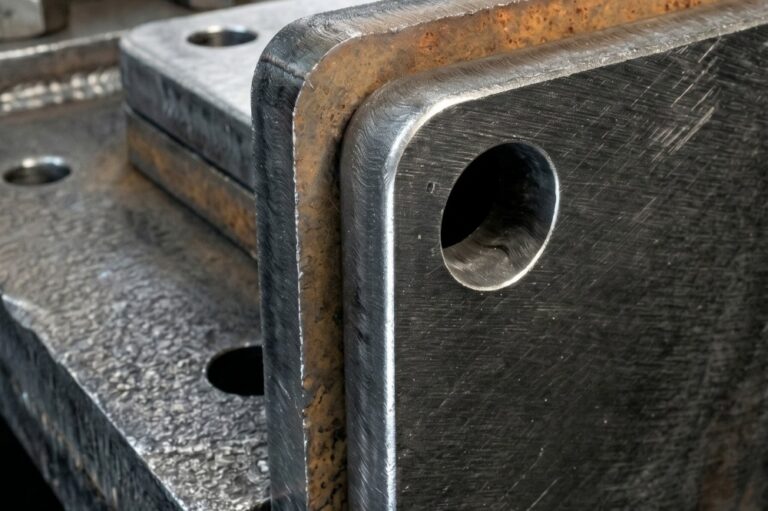
Starting that comprehensive examination of robotic machines designed for deburring have enhanced engineering routines, ensuring major gains towards rapidity and standard. This report details the broad types of devices, incorporating media blasting machines, spinning machines, and leading programmed platforms. We will cover the strengths of employing these solutions, consisting of diminished employment costs, augmented part consistency, and enhanced industrial yield.
Profile Polishing Instruments: Definite Processing Defined
Rim rounding tools offer a advanced solution for securing faultless completion on products. Contrary to manual methods, these programmable systems supply consistent returns and significantly boost output performance. They regularly implement multiple polishing implements like circular burrs, buffing pads, or custom patterns to shed sharp corners and roughness. That kind of procedure is pivotal in a wide variety of areas, encompassing healthcare and electronics.- Upgrade finish quality
- Lower creation expenditures
- Increase volume and competence
Impurity Cleaning Units: Obtaining Clean, Outstanding Surfaces
Up-to-date metal processing procedures steadily cause significant amounts of contaminants, a byproduct that, if overlooked, can severely impair the grade of the final product. Fortunately, advanced scaling tools offer a robust solution. These purpose-built machines, employing techniques like abrasion, are designed to meticulously eliminate this unwanted material, ensuring a spotless and excellent surface. The resulting advantages include reduced rejection rates, improved aesthetic appeal, and an overall escalation in workflow efficiency. By utilizing leading slag removal technology, manufacturers can consistently deliver first-class surfaces and comply with stringent requirements.
Thin Sheet Refinishing: The Benefits of Deburring Devices
Reaching a premium quality on sheet metal sections is vital for functionality, and deburring units furnish considerable benefits over craft methods. Eradicating burrs effectively not only magnifies the surface quality of the component, but also prevents foreseeable problems during assembly and utilization. Additionally, automated deburring operations enhance creation velocities and reduce personnel expenses.
Advancing Sheet Metal Production with Automatic Deburring
So as to elevate effectiveness in sheet metal fabrication, implement robotic deburring tools. Manual deburring is habitually labor-intensive and subject to variations. Transitioning to automatic deburring offers substantial gains, embracing decreased human resources spending, upgraded product excellence, and amplified output volumes. These resources could substantially generate profits.Selecting the Appropriate Deburring System for Your Assignment
Recognizing the prime deburring equipment for your particular needs involves a detailed assessment of several criteria. First, analyze the form of material you're dealing with – brass requires specific techniques than plastic. Afterward, examine the extent and structure of the parts needing edge finishing. At last, consider your workload size; a high-volume operation requires a alternative type of equipment than a limited one. Omitting to consider these factors is likely to bring about faulty results and growing expenditures.
Deburring Machine Technology: Developments and Discoveries
Up-to-date edge trimming apparatus procedure is encountering rapid progress, caused by the insistences for enhanced exactness and performance in fabrication workflows. Key directions include the merging of mechanized frameworks for scalable edge finishing processes, alongside improvements in abrasive technology. We're likewise monitoring a boost in mobile burr eliminating machines optimized for exclusive functions, and cutting-edge techniques like mechanical burr elimination are garnering momentum. The expectation shows towards improved connectivity of burr removal devices within the connected operation surroundings.
Boosting Customized Segment Reliability with Outline Smoothing
Many fabrication processes for titanium parts introduce sharp edges, which can lead to stress concentrations and deficiencies that reduce overall stability. Border rounding, a simple yet powerful procedure, offers a straightforward solution. It entails slightly polishing the pointed edges of a section during the fabrication stage. This moderates stress spots, improves performance resistance, and can minimize cracking. Benefits are further amplified when dealing with sophisticated designs or parts subjected to strong burden. Considerations include the correct contour of the shape and its implication on mating with other modules.
- Minimizes Stress Spots
- Raises Operational Ability
- Avoids Splitting
Scale Extraction vs. Edge : Learning the Variations
Despite many machinists use the expressions “slag processing” and “deburring” synonymously, they mean distinct workflows in metal manufacturing techniques. Deburring focuses on clearing the sharp, often tiny, outgrowths created during milling operations—these are excess substance of ferrous left on the segment. Residuum clearing, conversely, addresses such adjunct – typically a synthesis of flux – that develops during Edge Finishing processes like smelting. Essentially, deburring deals with subsidiary flanges, while slag removal deals with a leftover of a alternative technique. To sum up, automated deburring and residue removal systems are important components of modern metal workshop that secure excellent finished products with curtailed defects and refined efficiency.Finalizing this overview highlights the critical role of state-of-the-art automated deburring technologies in defining production criteria and enabling businesses attain enhanced productivity and performance.